
Before the Oni, the Kitsune and the kami, Japan produced figurines that still puzzle archaeologists. The Dogū (土偶) are clay statuettes shaped during the Jōmon period, thousands of years ago. With their stylised bodies and huge eyes, some have seen aliens, others fertility goddesses. The truth is more cautious, but no less fascinating. Here's what the Dogū are, what we know, and what remains a mystery.
Read the article about Oni masks · See Oni masks
What is a Dogū?
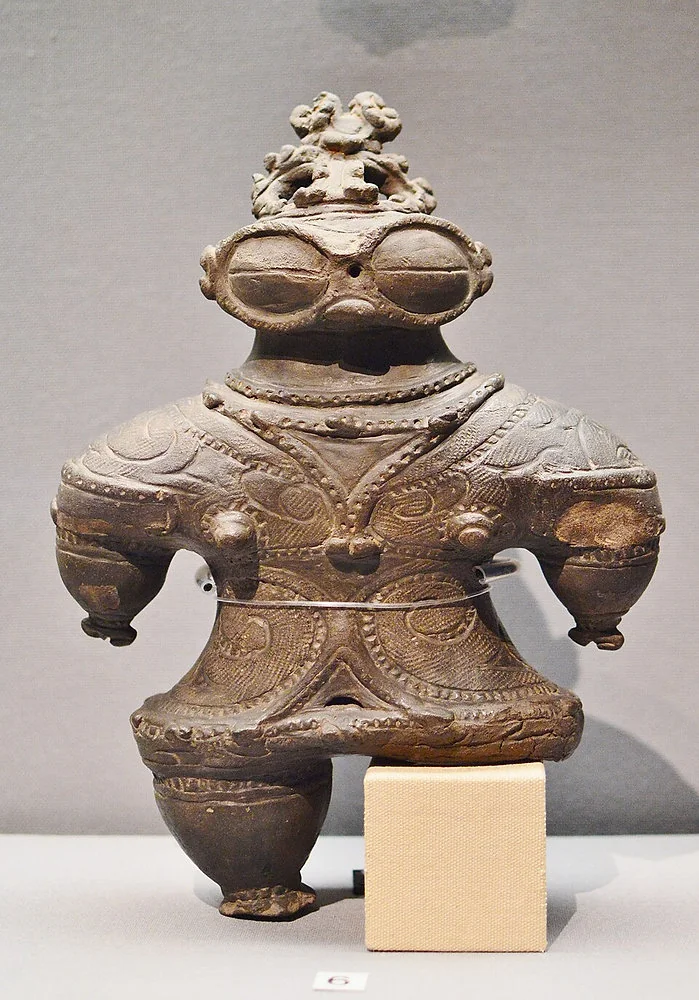
Dogū are humanoid terracotta figurines made during the Jōmon period, Japan's long prehistory of settled hunter-gatherers (roughly 14,000 to 400 BCE). Thousands have been found, mostly in eastern and northern Japan. The great majority depict female forms, with wide hips and sometimes a marked chest or belly, which has fed the idea of a link to fertility. Their style varies enormously across eras and regions, from simple shapes to extremely elaborate creations covered in incised patterns.
The famous snow-goggle eyes
The most famous type is the shakōki-dogū (遮光器土偶), literally "snow-goggle dogū." The name comes from its huge eyes, in the form of bulging slits, recalling the carved snow goggles worn by Arctic peoples to guard against glare. It's this look, at once geometric and strange, that fuelled the "ancient astronaut" theories of the 20th century. Archaeologists instead see an artistic stylisation typical of the late Jōmon, with no connection to any spacesuit. The effect remains striking: these figurines are nearly three thousand years old yet look resolutely modern.
What were they for? The theories
The Dogū's function is still debated, but several solid threads emerge.
- Fertility and fecundity: the prevalence of female forms suggests a link to motherhood, harvests or the group's prosperity. - Healing effigies: a common hypothesis holds that a person's illness or pain was symbolically transferred into the figurine, which was then broken to drive out the harm. - Ritual and funerary objects: some Dogū accompanied burials or marked ceremonial sites.
None of these explanations is definitive, and it's likely the Dogū served several uses across eras and communities.
Why are they often broken?
This is one of the most telling clues: a great many Dogū have been found broken, often at a specific limb, never shattered at random. Many archaeologists see a deliberate act. Under the healing hypothesis, the figurine was broken on purpose, say the leg matching the patient's pain, to transfer and destroy the harm. Others see a ritual "killing" of the object to release its power. This practice of intentional breaking links the Dogū to a logic found much later in the Japanese relationship to objects, as with kintsugi or the tsukumogami.
The legacy of the Dogū
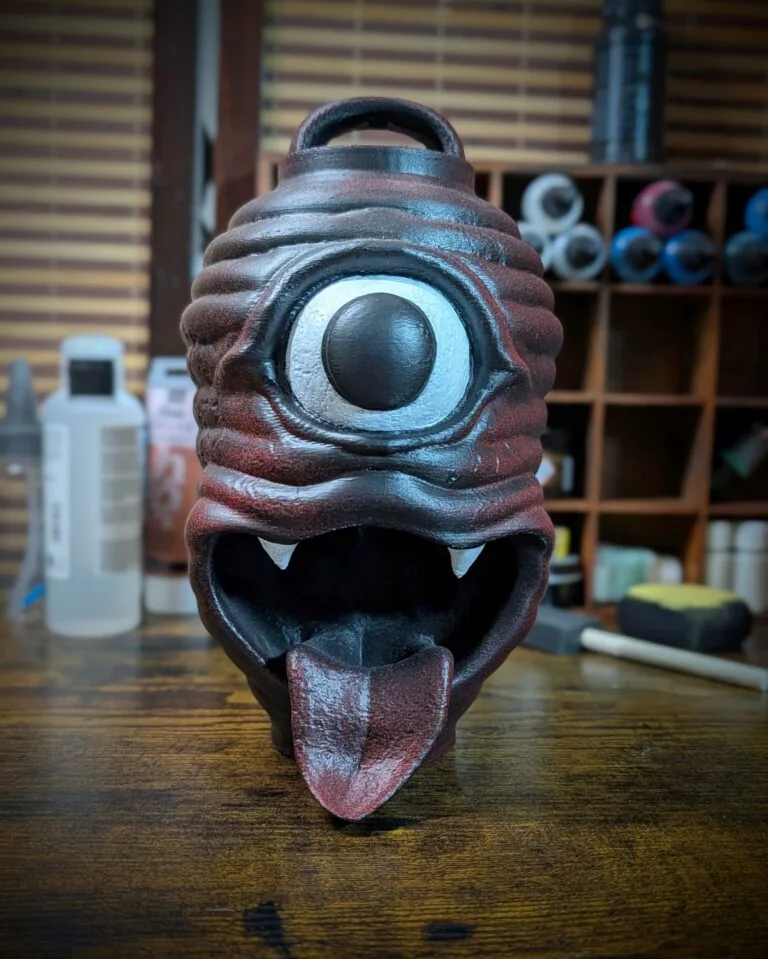
Four Dogū are today designated National Treasures of Japan, a sign of their heritage importance. Beyond archaeology, their silhouette inspires contemporary design, manga and video games, where they often appear as mysterious creatures or artefacts. They represent the very first chapter of Japan's visual imagination, long before the yokai and kami that would later people the islands' beliefs.
FAQ
What is a Dogū?
A humanoid clay figurine shaped during the Jōmon period (roughly 14,000 to 400 BCE). Most depict stylised female forms. Thousands have been found, mostly in eastern and northern Japan.
Why do Dogū have big eyes?
The shakōki-dogū type owes its name to its bulging slit eyes, recalling Arctic snow goggles. It's an artistic stylisation of the late Jōmon, not proof of aliens as some theories claimed.
What were the Dogū for?
Their function is debated. The main threads are fertility, healing effigies (symbolic transfer of illness) and ritual or funerary use. They likely had several uses.
Why are Dogū often broken?
Many were found broken at specific points, suggesting a deliberate act. The commonest hypothesis is that the figurine was broken to transfer and destroy a person's illness or harm.