A kami (神) isn't a god in the Western sense. It's a sacred presence: a mountain, a tree, a river, a deity, an ancestor, sometimes a force that's hard to name. What makes kami fascinating is their blurry border with yokai: Raijin has fangs and the look of a demon yet remains a deity, and Inari is tied to Kitsune foxes, protective or deceitful depending on the tale. This guide sets the basics: what a kami is, why people speak of "eight million gods," and how to tell it apart from a yokai.
Why "eight million gods"
The phrase Yaoyorozu no Kami (八百万の神) literally means "eight million kami," but the number is symbolic: it means "countless." Japan doesn't have eight million catalogued deities, it potentially has an infinity, because anything can become a kami. The logic is simple: if a place, an object or a natural being inspires enough awe or respect, it receives a shimenawa, the sacred rope, and becomes a worshipped kami. That's why you see these ropes around rocks, waterfalls, old trees, and even around the waists of sumo champions at ceremonies, because they embody a near-divine force.
Kami or yokai: the difference
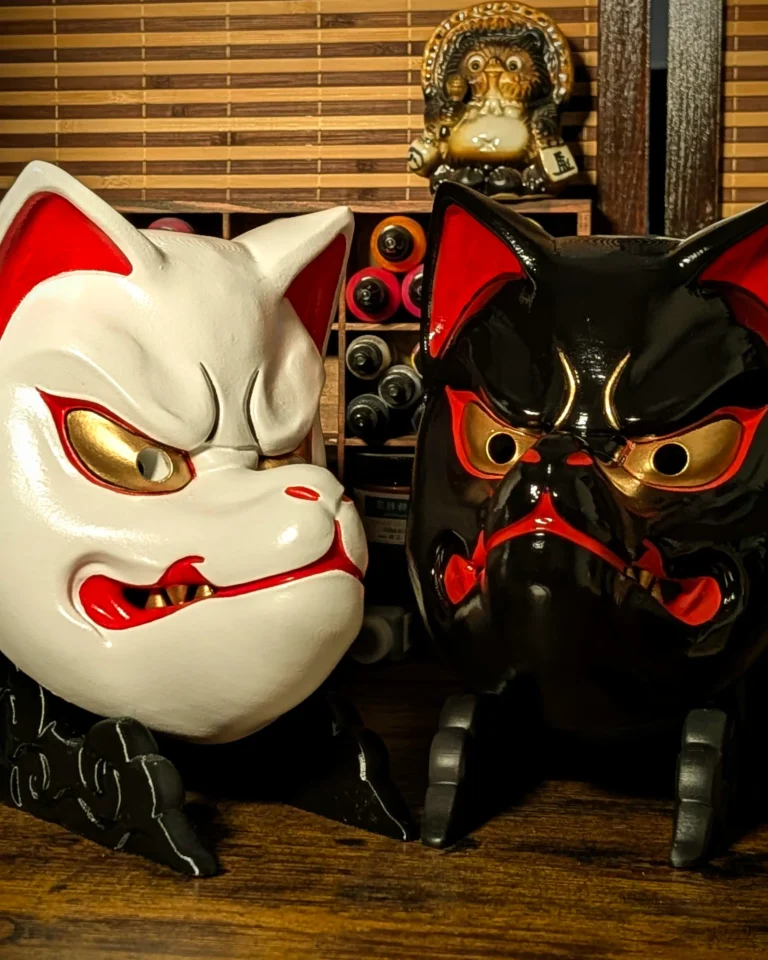
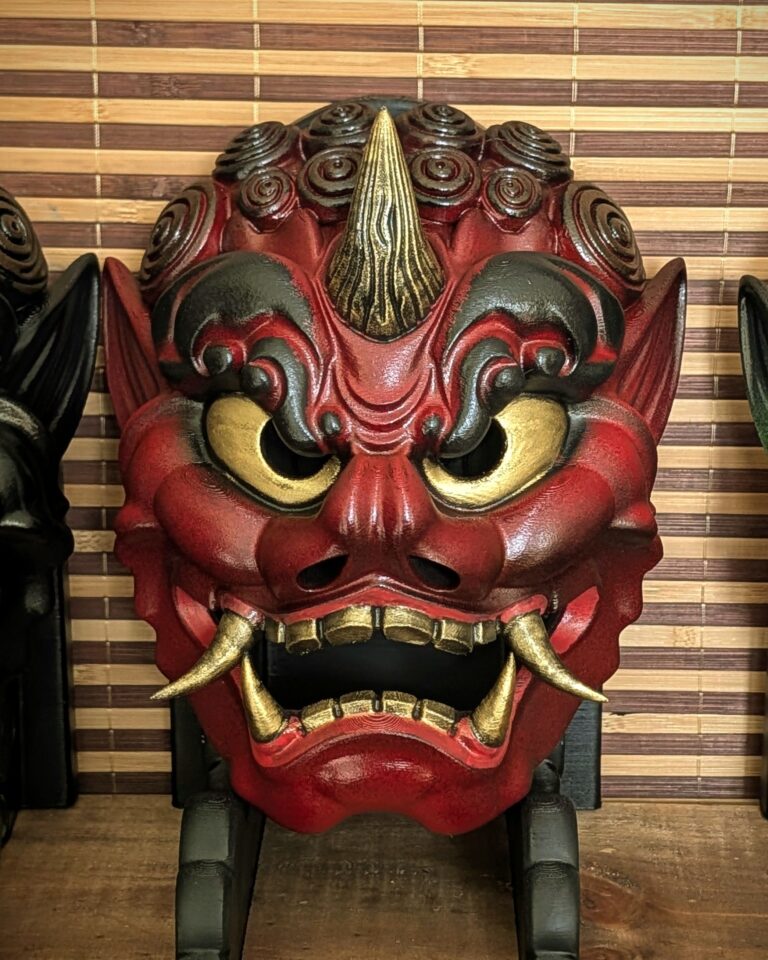
This is the most common confusion. In short: the kami is a sacred presence you worship, make offerings to, and build a shrine for. The yokai is a strange creature you fear, avoid or bargain with. But the border is porous. Raijin looks like an Oni but he's a kami. Tengu were disruptive yokai in the 9th century, then some were "promoted" to protective kami. The Kitsune is a yokai when it plays tricks, and Inari's messenger when it guards the harvest. Same creature, two statuses depending on context.
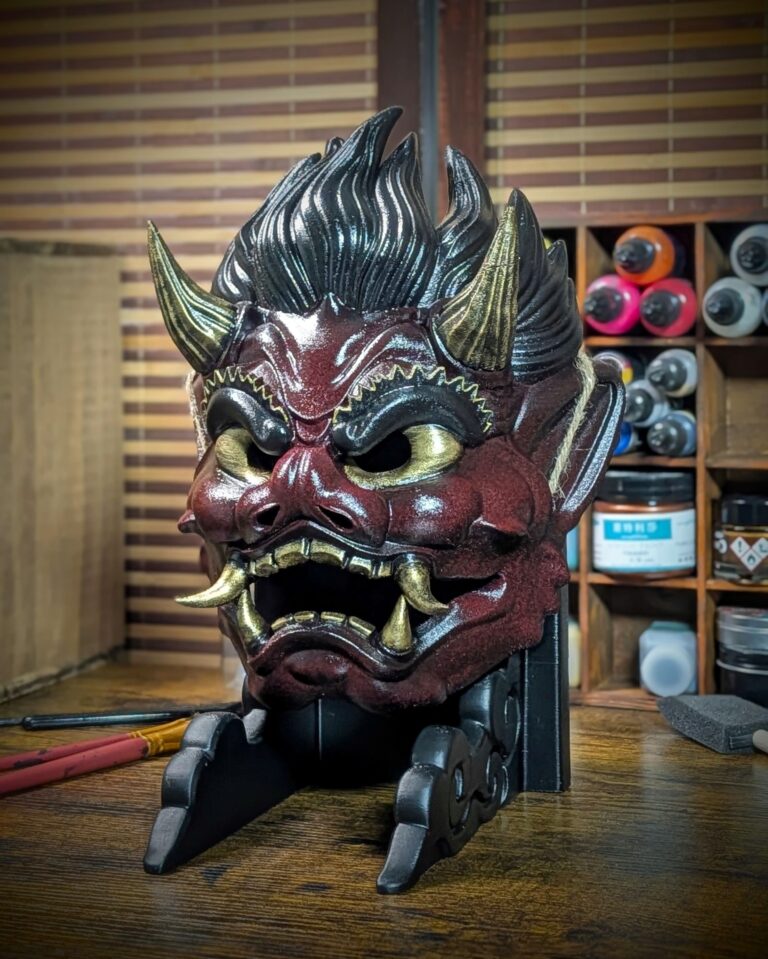
Read the guide to yokai · See Japanese masks
The great kami to know
Amaterasu (天照) is Shinto's great solar goddess and the mythical ancestor of the imperial line. Her best-known tale is her retreat into a cave, which plunges the world into darkness (see the Amaterasu article).
Inari (稲荷) is the kami of rice, commerce and prosperity, whose messengers are the Kitsune foxes. Japan has over 30,000 Inari shrines, including the Fushimi Inari-taisha in Kyoto with its thousands of red torii (see the Inari article).
Raijin (雷神) is the thunder god, coloured skin and fangs, ringed by a circle of taiko drums (see the Raijin guide). Fujin (風神), his eternal counterpart, is the wind god, carrying a great wind bag on his shoulders (see the Fujin guide). Together they're linked to the kamikaze, the "divine winds" said to have scattered the Mongol fleets in 1274 and 1281.
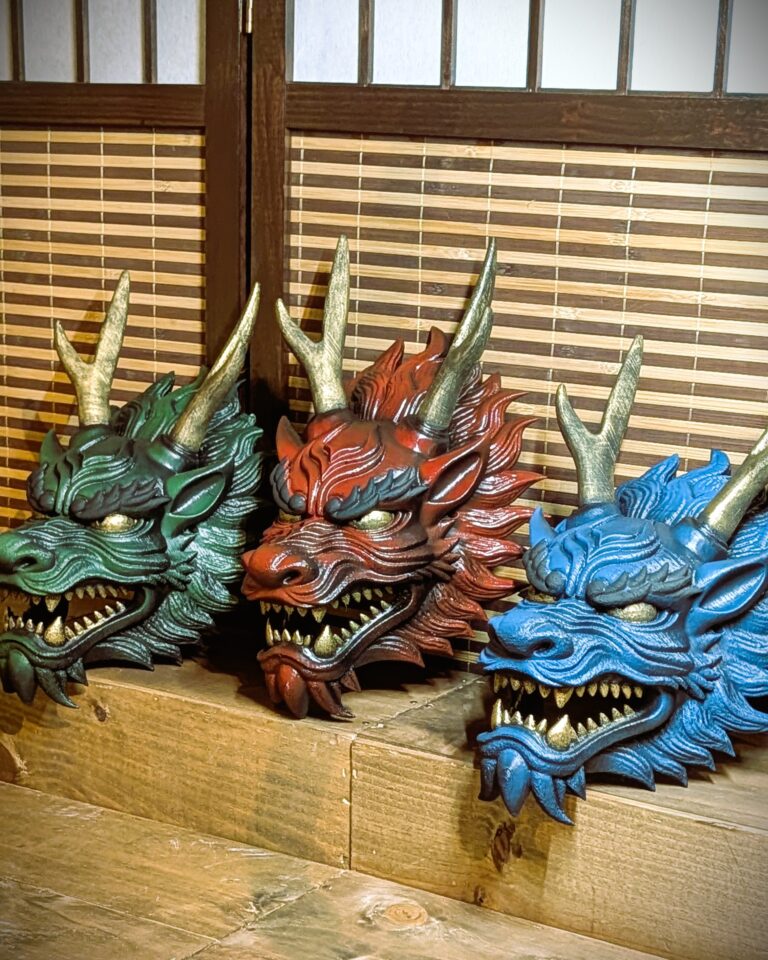
Ryūjin (龍神), finally, is the dragon god of the seas, master of the tides, who lives in an undersea palace. The Ryū dragon is both yokai and kami depending on context.
Where kami are worshipped
The central place is the Shinto shrine (jinja), marked by its red or orange torii, the gate that separates the profane from the sacred. There you purify your hands at the fountain (temizuya), clap twice to draw the kami's attention, bow and pray. Many homes also have a small household altar (kamidana) where rice, sake, salt and water are placed. And nature itself serves as a shrine: a rock girded with a shimenawa, a century-old tree, a waterfall, the summit of Mount Fuji. Kami don't need walls.
FAQ
What is the difference between a kami and a yokai?
The kami is a Shinto deity worshipped at a shrine. The yokai is a supernatural creature feared or tolerated. The border stays blurry: Raijin looks like an Oni but he's a kami, and a powerful enough yokai can be "promoted" to kami.
How many kami are there in Japan?
The phrase says "eight million" (Yaoyorozu), but the figure means "countless." Anything can become a kami if it inspires enough sacred respect: a tree, a rock, a mountain, an ancestor.
Can a kami be evil?
A kami is neither good nor evil by nature, it is powerful. A benevolent kami can turn destructive if disrespected, and a terrifying kami like Raijin can protect if worshipped well. It's the relationship, not the nature, that decides.
Does Shinto have a sacred book?
Not in the sense of a Bible. The two founding texts are the Kojiki (712) and the Nihon Shoki (720), which tell of Japan's creation by the kami Izanagi and Izanami but contain no moral commandments. Shinto is a practice, not a doctrine.