
Not all 3D-printed Japanese masks are equal, and the difference doesn't always show in a photo: it's in the material. PETG, PLA, resin, each reacts differently to heat, impact and time. For a mask meant to be worn at conventions or displayed for years, this choice changes everything. Here's a clear comparison, from the point of view of a maker who prints, sands and paints his masks in PETG.
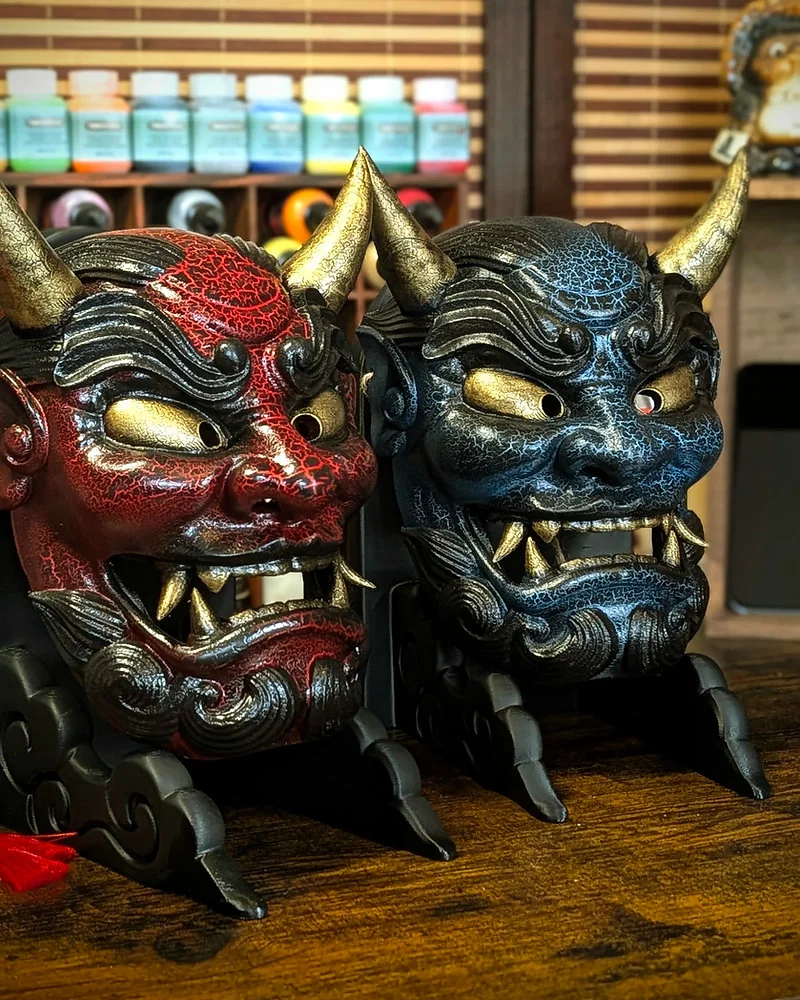
Read the article about Oni masks · See Oni masks
The three materials in brief
PLA is the most common 3D-printing plastic: easy to print, rigid, cheap, but heat-sensitive and rather brittle. PETG is a technical plastic, more flexible and more resistant to both impact and heat, from the same family as food bottles. Resin (SLA printing) gives the finest, most detailed surface, but the material is usually fragile, UV-sensitive and heavy. For a mask, the right choice depends on use: pure display, regular wear, or both.
The comparison
| Criterion | PLA | PETG | Resin (SLA) | |-----------|-----|------|-------------| | Heat resistance | Low (~55 °C, softens in sun) | Good (~70 °C) | Variable, often brittle in heat | | Impact resistance | Brittle | Flexible, takes hits | Fragile | | Durability | Can yellow/warp | Stable, doesn't yellow | UV-sensitive | | Surface detail | Good | Good after sanding | Excellent | | Weight | Light | Light (~150 g) | Heavier | | Ideal use | Indoor decor | Wear + decor | Static collector's piece |
Why I work in PETG
PETG ticks the boxes that matter for a mask worn as much as displayed. It holds up to around 70 °C without warping, where PLA softens at 55 °C: decisive for a dark mask worn in summer sun, or left in a car. It's flexible rather than brittle, so it takes the knocks of a convention bag or a fall, where PLA and resin crack. It doesn't yellow over time, unlike cheap resins that turn cream after a few months of light. And a finished mask stays light, around 150 g, against 1 to 2 kg for a historic iron mempo: wearable all day without fatigue.
The flip side: sanding
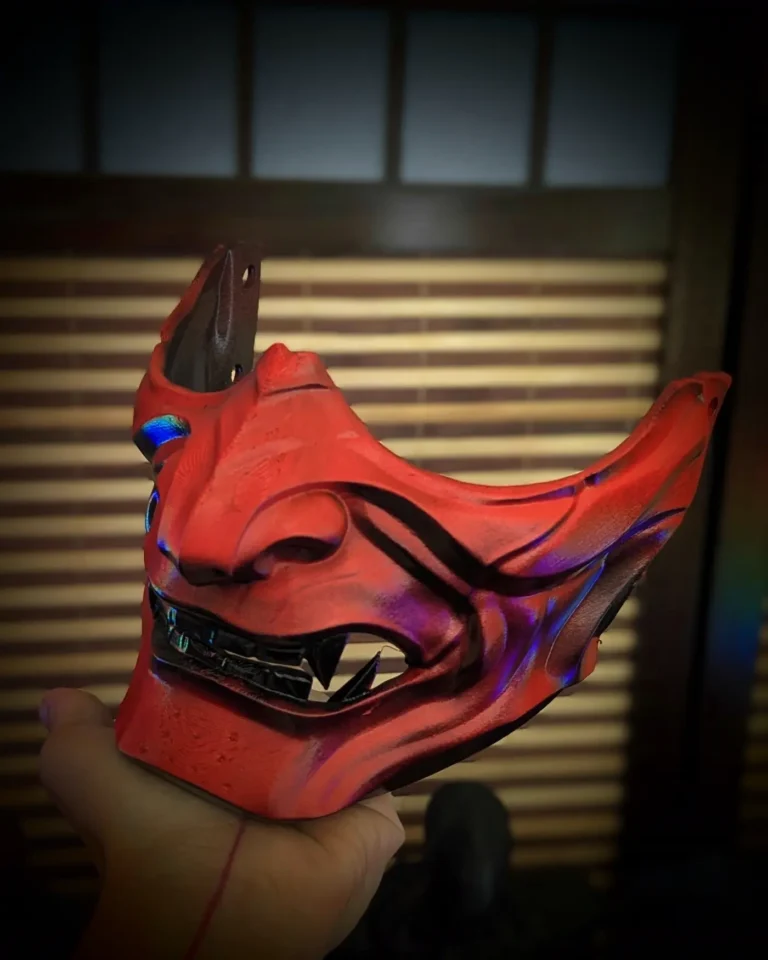
PETG has one drawback, and it's exactly what separates a worked piece from a raw print. Its surface keeps print lines that must be hand-sanded, grit by grit (120 to 400), following the curves. On fine areas like the horns of a Hannya or the fangs of an Oni, it's a test of patience: rushing flattens the profile and loses the elegance. It's this invisible time, plus the sanding and the varnished paint coats, that separates a handmade mask from an injection-moulded copy or an AliExpress model.
And for wearing the mask?
For cosplay and conventions, PETG is the most versatile: light, sweat- and humidity-resistant, it handles a full day and repeated handling. For a purely decorative, static piece, resin can appeal with its detail, provided you keep it away from sun and knocks. For mixed use, occasional wear and wall display, PETG remains the best compromise. Whatever the material, care follows the same rules, detailed in the care guide.
FAQ
Is PETG better than resin for a mask?
For a worn mask, yes: PETG is lighter, more impact- and heat-resistant, and doesn't yellow. Resin offers superior surface detail but stays fragile and UV-sensitive, which makes it more suited to static collector's pieces.
Why avoid PLA for a mask?
PLA softens at 55 °C: a PLA mask can warp in a car or in the sun, and it's brittle. It suits indoor decor, less so convention wear.
Is a PETG mask heavy?
No. A finished PETG mask weighs around 150 g, against 1 to 2 kg for a historic iron mempo. It's comfortable to wear all day.
Does PETG yellow over time?
No, PETG is stable and doesn't yellow, unlike some cheap resins that turn cream after a few months of light exposure. A varnish adds extra protection.