The Kappa (河童, "river child") is Japan's best-known water yokai, and one of the most ambivalent. Child-sized, with reptilian skin, webbed hands and a tortoise shell, it drowns the careless yet teaches the art of setting bones. Its one defining feature, a dish of water on its head, makes it one of the few monsters you can defeat with plain politeness. Here's what the Kappa really is, its weakness, and why Japan both fears and respects it.
What is a Kappa?
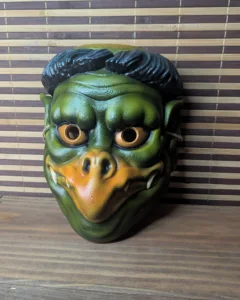
The Kappa haunts the rivers, ponds and pools of Japan. It's described as child-sized, with green or yellowish, sometimes scaly skin, a beak or pointed mouth, webbed hands and feet, and often a tortoise shell on its back. It smells of the river, sometimes of fish. But the detail that matters most is the sara (皿), a dish of water on top of its skull. As long as it stays full, the Kappa keeps its supernatural strength. If it empties or spills, the Kappa grows weak, even paralysed. That's the source of the most famous trick in Japanese folklore for getting rid of one.
Read the article about Kappa · See the Kappa mask
The weakness: a polite bow
The Kappa is obsessed with politeness, especially the bow. If you meet a threatening Kappa, the counter is to bow to it deeply. Out of courteous reflex, the Kappa will bow back, and as it bends, the water in its sara pours out. Stripped of its power source, it becomes harmless and must return to the water. It's one of the rare folklore creatures you neutralise with good manners rather than force, which says a lot about the place of etiquette in Japanese culture.
The dark side: the shirikodama
The Kappa is no harmless cartoon. In the old legends, it lures humans and livestock into the water to drown them. Worse, it's said to seek the shirikodama (尻子玉), a mythical ball thought to sit inside the human body near the anus, which it extracts from its drowned victims. Behind this grotesque image lies a clear social function: the Kappa legend warned children away from dangerous rivers and waterways. A useful monster, in the end.
The bright side: cucumbers and mended bones
The Kappa has two passions that soften its reputation. The first, the cucumber: it's its favourite food, so much so that the cucumber maki roll is called kappamaki. It's said that throwing a cucumber carved with your family name into the river wins the Kappa's favour. The second is more surprising: caught or won over, the Kappa teaches humans the art of setting fractures and resetting bones, a craft it's said to master. Several shrines are dedicated to it, like the Kappabashi district in Tokyo. It's also a sumo enthusiast and likes to challenge passers-by to a bout.
Why the Kappa still fascinates
The Kappa sums up the logic of yokai: neither purely good nor purely evil, but ambivalent, dangerous when neglected, useful when respected. It's a nature spirit reminding us that water gives life and takes it back. In popular culture it's everywhere, from old prints to modern mascots and video games. Like the Oni or the Kitsune, it belongs to the pantheon of creatures that shape the Japanese imagination.
FAQ
What is a Kappa in Japan?
The Kappa is a child-sized water yokai with reptilian skin, webbed hands and a tortoise shell, living in rivers and ponds. Its distinctive feature is a dish of water (sara) on its head, the source of its power.
What is the Kappa's weakness?
The water in the dish on its head. If it spills, the Kappa loses its strength. Because the Kappa is obsessed with politeness, bowing to it makes it bow back, which empties the dish and leaves it harmless.
Why does the Kappa love cucumbers?
The cucumber is its favourite food in folklore, so much so that the cucumber maki roll bears its name (kappamaki). Offering a cucumber to the river is said to win its favour.
Is the Kappa dangerous?
In the legends, yes: it drowns humans and livestock and seeks the shirikodama. But it has a beneficial side too, teaching the art of setting bones. The legend mainly served as a warning to children against dangerous waters.