The samurai is more than a silhouette with a katana against a setting sun. It was a warrior class that changed role across the centuries: palace guard, mounted archer, soldier, then administrator in a silk kimono. Following that arc is the key to understanding why mempo and armour masks existed, what a protected face was really for, and how rank was read in a warrior's gear. This guide lays out the basics: where the word comes from, the great eras, the Bushido code, the real arsenal, and the link to war masks.
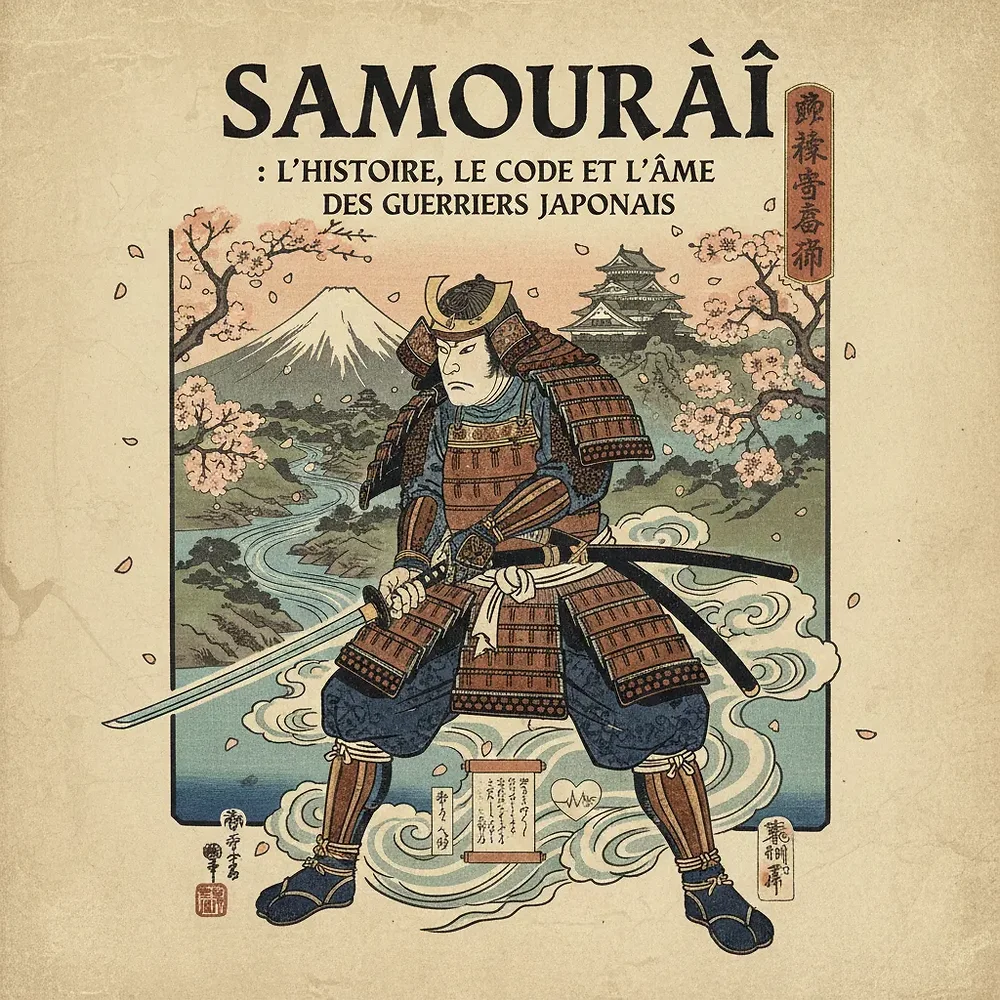
What the word "samurai" means
Before they were warlords, they were servants. The word samurai comes from the old verb saburau, "to serve" or "to attend" a high-ranking noble. In the Heian period (794-1185) it meant the palace guards and armed officials who protected aristocrats. There's a more martial word too: bushi (武士), where bu is combat and shi is the man or scholar. The bushi is the warrior as fighter; the samurai is the warrior as social vassal. In time the two merged, fusing status and military function.
The great eras, from bow to musket
The samurai story isn't one fixed block; it ran from mounted archer to bureaucrat. At first, power lay with the emperor and the Kyoto court aristocrats, who scorned violence and farmed out security to rural warrior clans. Fatal mistake: those clans, the Minamoto (Genji) and the Taira (Heike) above all, grew powerful enough to fight each other. The Genpei War (1180-1185) was the turning point: the Minamoto won and set up the first shogunate at Kamakura, reducing the emperor to a symbol.
Then came the most famous era, the Sengoku Jidai (15th-16th century), the one games and anime draw on. Central power collapses, Japan shatters into dozens of states ruled by warlords (daimyō), and betrayal becomes routine (gekokujō, "the low overthrows the high"). Three men reunified the country: Oda Nobunaga, the innovator who adopted firearms en masse; Toyotomi Hideyoshi, the peasant who rose to rule Japan; and Tokugawa Ieyasu, the patient strategist who imposed lasting peace.
Under the Tokugawa shogunate (1603-1868), Japan closed its borders (sakoku) and saw 250 years without major war. What does a warrior do with no war? He becomes an administrator, a policeman, a bureaucrat. The samurai froze into a hereditary class at the top of society, the only ones allowed two swords and a family name. It was in that peace that Bushido was written down, idealising a warrior past already gone. The end came with the Meiji Restoration (1868): the class abolished, sword-wearing banned in 1876 (the Haitōrei edict), and the tragic revolt of Saigō Takamori, the blade broken against modern rifles.
Bushido: the seven virtues
Bushido (武士道) isn't a single rulebook but a body of moral codes that matured over centuries, blending Zen detachment, Confucian loyalty and Shinto purity. It's often summed up in seven virtues:
- Gi (rectitude): act justly, without hesitation. - Yū (courage): heroism that's clear-eyed, not blind. - Jin (benevolence): strength must protect the weak. - Rei (respect): courtesy as the expression of mastered strength. - Makoto (sincerity): a samurai's word is a contract. - Meiyo (honour): the supreme value, living without it being worse than death. - Chūgi (loyalty): absolute fidelity to one's lord, to the death.
The relation to death is central. Seppuku (or hara-kiri) wasn't despair but an act of restoring honour. The belly (hara) was opened because the Japanese located the soul and courage there: showing the inside of one's belly meant showing the purity of one's soul. The rite was highly codified, often assisted by a kaishakunin, a second who beheaded the warrior at the critical moment to cut short his suffering.
The real arsenal, far more than the katana
This is where history corrects cinema. The katana is the samurai's soul, but on the battlefield it was often a secondary weapon. A real bushi mastered a whole arsenal.
| Weapon | Use | |--------|-----| | Yumi (asymmetric bow, 2 m+) | The original noble weapon. "The way of bow and horse" predates the sword. | | Yari (spear) | Queen of the battlefield, reach and close formation. | | Naginata (curved blade on a shaft) | Weapon of warrior monks and women samurai, sweeps wide. | | Tanegashima (matchlock) | Brought by the Portuguese in 1543, decisive at Nagashino (1575). | | Katana + wakizashi (the daishō) | The long sword for combat, the short one for close defence and seppuku. |
The bow deserves a note: "the way of the warrior" was first called kyūba no michi, the way of bow and horse. Before he was a swordsman, the samurai was an elite mounted archer. Firearms changed everything: at Nagashino in 1575, Nobunaga lined up arquebusiers in firing ranks to break the Takeda cavalry, ending the age of individual heroism.
The double way: Bunbu Ryōdō
A samurai who only knew how to kill was seen as a barbarian. The caste's ideal was bunbu ryōdō, "the brush and the sword in harmony." The greatest warlords, Nobunaga included, practised the tea ceremony (chanoyu): before a battle, preparing tea demands total calm, an active meditation to settle the mind. Zen Buddhism completed this mental training, prizing intuitive action and the empty mind (mushin). For a swordsman, thinking "I must strike" is already too slow. You strike without thinking.
Women warriors and rōnin
History often erased the women, but they were there, naginata in hand. The onna-bugeisha were given strict martial training to defend the home. Tomoe Gozen, in the 12th century, commanded troops and charged on horseback; the Heike Monogatari says she was worth a thousand warriors. In the 19th century, Nakano Takeko led an all-female unit in a charge against imperial rifles during the Boshin War.
And when a samurai lost his master, through death or disgrace, he became a rōnin, a "wave man." With no stipend he turned mercenary, bodyguard or wandering sword master, like Miyamoto Musashi, author of The Book of Five Rings. The legend of the 47 rōnin remains the ultimate example of loyalty. To go further, see the story of Watanabe no Tsuna, the demon-slaying samurai, and that of the Shōgun, who really ruled Japan.
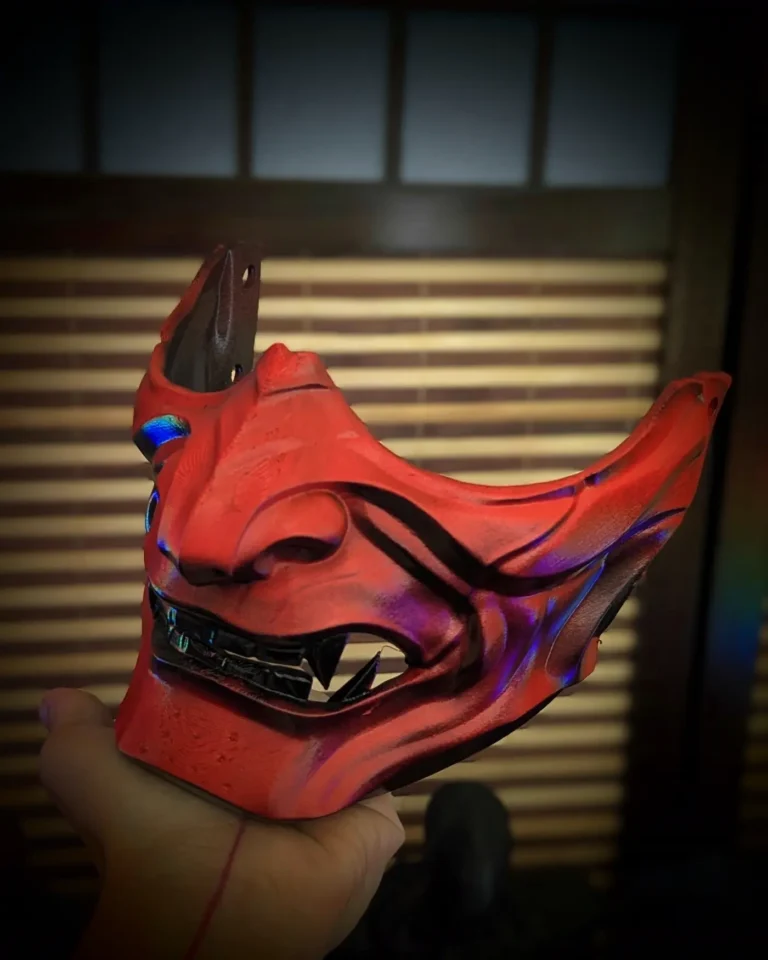
Read the article about Oni masks · See Oni masks
FAQ
What's the difference between a samurai and a ninja?
In theory they're opposites: the samurai fights openly, serves a lord, follows a code of honour and belongs to the nobility; the ninja (shinobi) deals in espionage and invisible combat, with no code of glory. In practice the line was blurry, some samurai being trained in intelligence work and commanding ninja units.
Why did samurai shave their heads?
The hairstyle is called the chonmage. The top of the head was shaved so the helmet (kabuto) sat better and to vent heat in battle, the rear topknot acting as a cushion. It later became a status symbol, even in peacetime.
Does a katana really cut through anything?
That's a movie myth. The katana is superb at cutting flesh but stays rigid: struck against armour or another blade edge-to-edge, it can chip or break. The technique aimed at the gaps in armour (armpits, throat), not at the steel.
What did samurai wear on their faces?
The mempo (or menpō), an armour half-mask covering the lower face, which protected, anchored the helmet and intimidated the enemy with its aggressive features. That's the piece modern Mempo half-masks draw on.