
When an object breaks, the Western reflex is to throw it away: it's broken, it has lost its value. In Japan, you gather the pieces, glue them back with a precious lacquer, and trace the cracks in gold powder. The object isn't merely repaired, it has become more beautiful and more precious than before, its scars turned to lines of gold. This is kintsugi (金継ぎ), "golden joinery," and it's a philosophy as much as a technique.
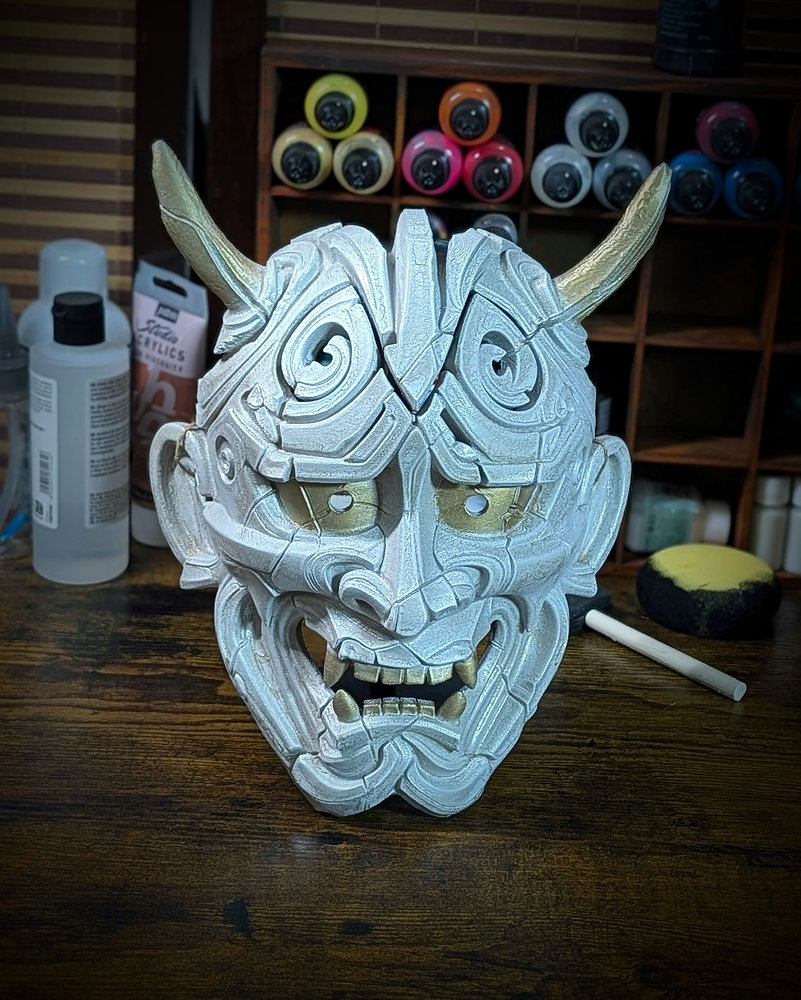
Read the article about Hannya masks · See Hannya masks
The origin: a broken tea bowl
Kintsugi was born not of artistic intent but of frustration. The legend goes back to the 15th century, around the shogun Ashikaga Yoshimasa (1436-1490), who owned a priceless Chinese tea bowl. The bowl broke, and Yoshimasa sent it to China to be mended. It came back stapled with metal clamps, sturdy but ugly. Furious, the shogun asked his craftsmen for something more beautiful. Their idea was brilliant: instead of hiding the repair, make it the feature. They mixed natural lacquer (urushi) with gold powder, and the cracks became golden veins, like the course of a river. The bowl was no longer merely repaired, it was unique.
The philosophy: wabi-sabi and resilience
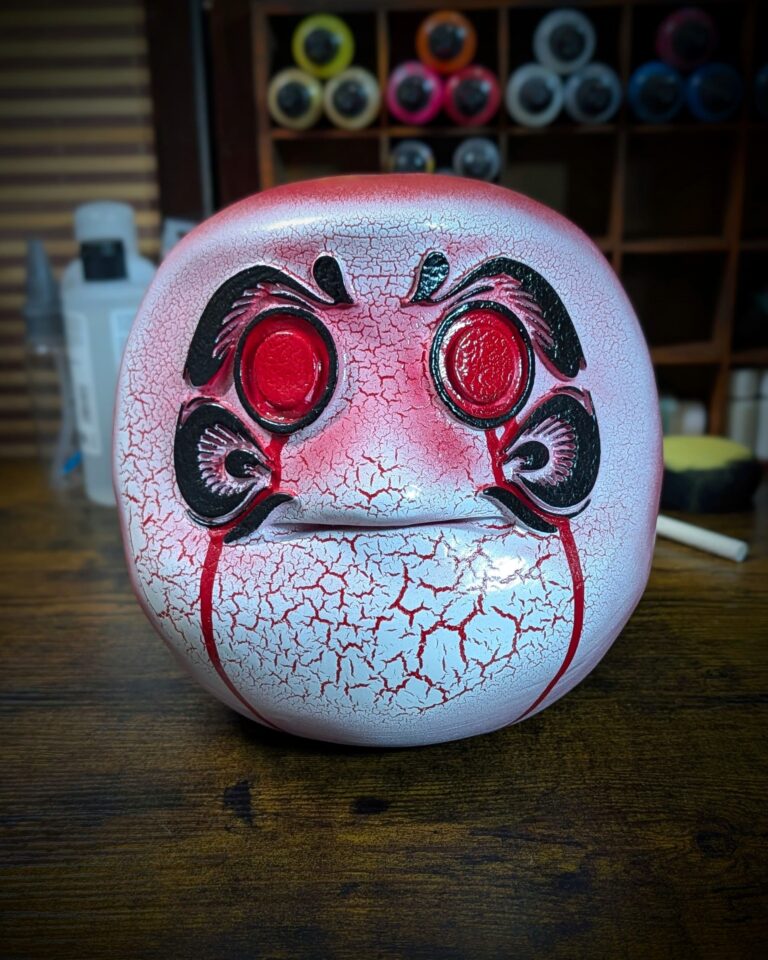
Kintsugi is the physical embodiment of wabi-sabi, the Japanese aesthetic that celebrates the imperfect and the time-worn: wabi (侘), simplicity, and sabi (寂), the patina and beauty of what has lived. Nothing lasts, nothing is perfect, and that's precisely what gives soul. A new object has no history; a repaired one does. From this comes the widely shared psychological reading: our cracks, failures, griefs and wounds aren't a shame to hide, they trace our story, and it's in rebuilding that we grow stronger. It's the same message as the Daruma, "fall seven times, rise eight," but expressed in gold.
From kintsugi to the mask
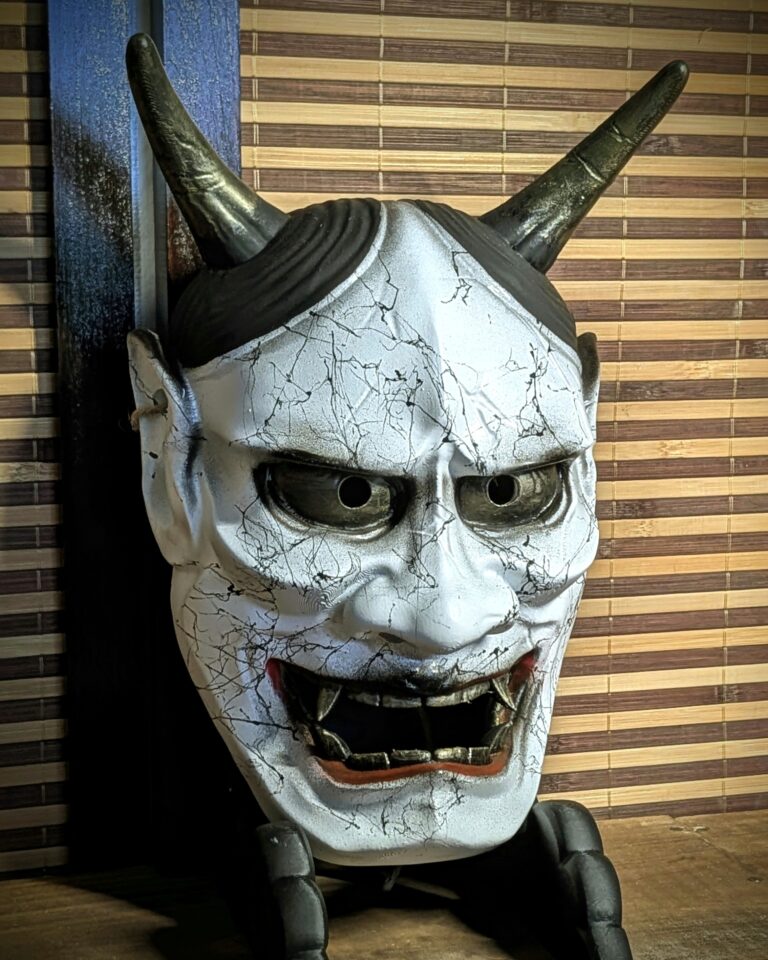
Translating this idea into a mask comes down to contrast: a dark or bone-white base, and golden cracks that seem to flow. On a Hannya, the meaning doubles. The Hannya is already a woman broken by jealousy and suffering; giving her golden scars says she didn't just collapse, she rebuilt herself, and her pain became her strength. One point matters: on a 3D-printed piece the cracks are sculpted into the design and painted to imitate kintsugi, not actually broken and reglued, which keeps the object solid. It's an aesthetic homage, not a real repair.
FAQ
What is kintsugi?
Kintsugi (金継ぎ), "golden joinery," is the Japanese art of repairing a broken object by highlighting its cracks with lacquer mixed with gold powder, rather than hiding them. The repaired object becomes unique and precious, its scars made a feature.
What's the difference between kintsugi and maki-e?
Maki-e is the art of sprinkling gold over lacquer to create decorative patterns. Kintsugi is specifically the art of repair: its lines follow the object's real fractures, not a pre-chosen design.
Can kintsugi be done in silver?
Yes. The classic version uses gold (kin), but there's also gin-tsugi, in silver, for a cooler, more lunar look. Other shades, like red, are possible on custom pieces.
Why pair kintsugi with a Hannya mask?
Because the Hannya already represents a woman broken by suffering. Giving her golden cracks extends the idea of kintsugi: the wound isn't hidden, it becomes a strength and a beauty.