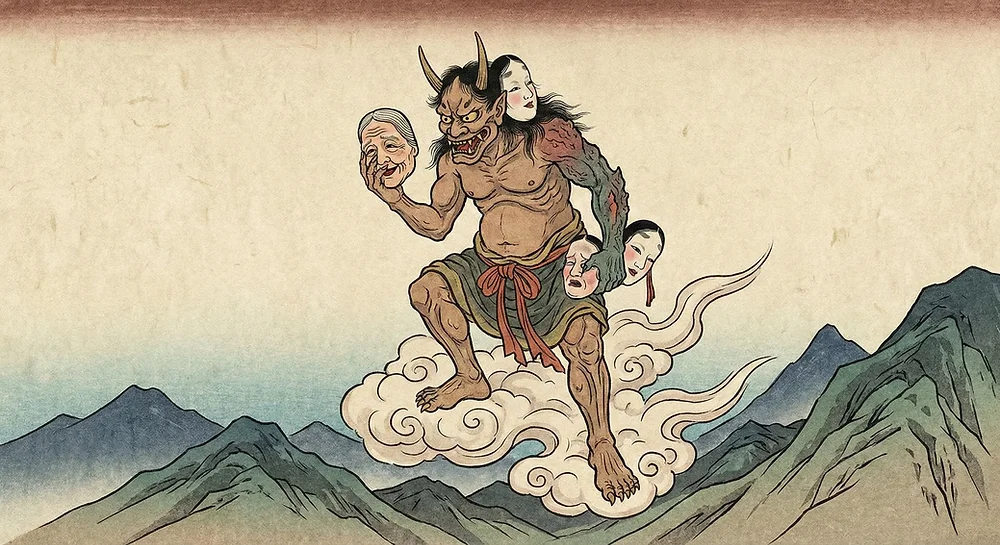
Ibaraki-doji is one of the great oni of Kyoto legend. He's known above all for one episode: his duel with the samurai Watanabe no Tsuna, in which he loses an arm yet never drops out of the story. That's what sets him apart from other folklore demons. Where most are monsters to be defeated, Ibaraki is a survivor, cunning, described as male in some versions and female in others.
Read the article about Oni masks · See Oni masks
The arm severed at the Rashomon gate
The episode that fixed his legend takes place in Kyoto. Ibaraki prowls near the Rashomon gate (in other versions the Ichijō Modoribashi bridge) and attacks by night, by surprise. That night he seizes the helmet of Watanabe no Tsuna, one of the four loyal lieutenants of the warlord Minamoto no Raikō, thinking he has easy prey. It's a mistake: Tsuna draws his sword, the famous Higekiri, and cuts the demon's arm clean off. After this feat the blade is renamed Onikiri, "the oni-slayer." Ibaraki flees screaming, leaving his arm behind.
Cunning over force
What follows is what makes Ibaraki unique among oni. Rather than coming back by force to retrieve his arm, kept at Watanabe no Tsuna's home, he chooses trickery. He takes the form of the samurai's old aunt (or nurse), imitates her voice and manners, and gets himself invited in. Once the chest is open and the arm recovered, he reverts to his demon form and vanishes. That convincing shapeshifting, closer to the fox Kitsune than to the brutal classic oni, makes Ibaraki a demon of infiltration: evil wearing the familiar face of a loved one.
Shuten-doji's lieutenant
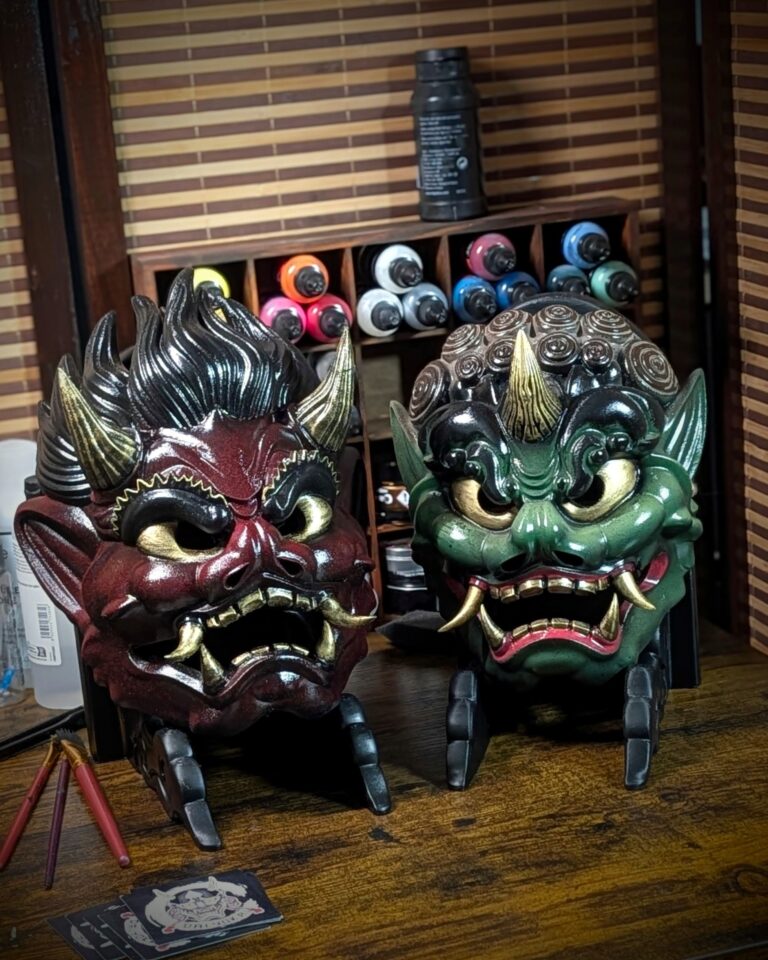
Ibaraki is almost always tied to Shuten-doji, the king of the oni of Mount Ōe. In the classic texts he is his right hand. When Minamoto no Raikō and his men infiltrate the Mount Ōe lair disguised as monks and get the demons drunk to behead Shuten-doji, Ibaraki survives and flees. That loyalty to his lord, and his stubborn survival, explain why he remains such a striking figure.
Male or female?
The question comes up often, especially with his current popularity. In medieval tales (otogi-zōshi), Ibaraki is male: the term dōji means a young boy or page. In Kabuki, the play Ibaraki is performed by a male actor playing the old aunt, creating a marked gender ambiguity. Modern works push that fluidity further, sometimes making him a female character. This flexibility is part of his identity and explains his success in pop culture and cosplay.
FAQ
Who is Ibaraki-doji?
One of the great oni of Kyoto legend, famous for losing an arm to the samurai Watanabe no Tsuna at the Rashomon gate. He is also the lieutenant of Shuten-doji, king of the oni of Mount Ōe, and a master of shapeshifting.
How did Ibaraki lose his arm?
During a night attack near the Rashomon gate, he grabs Watanabe no Tsuna, who cuts his arm off with his sword Higekiri. The blade is then renamed Onikiri, "the oni-slayer."
Is Ibaraki-doji a Hannya?
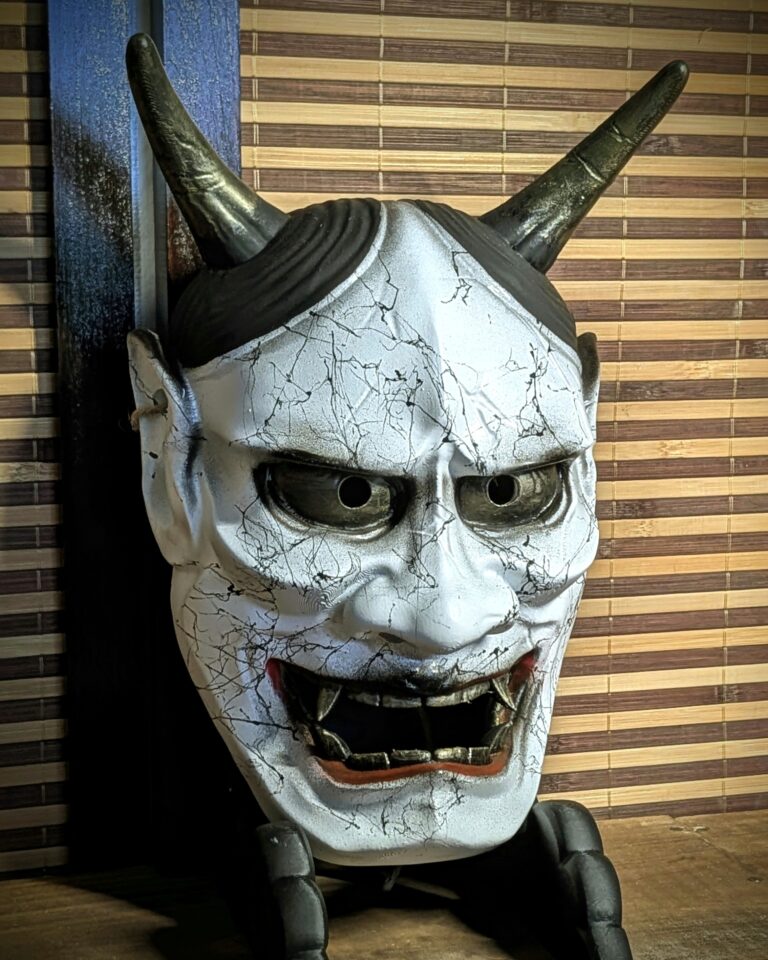
No, though the confusion exists. A Hannya is a human woman transformed by jealousy. Ibaraki is an oni who can take a woman's form. The Hannya suffers her emotions; Ibaraki uses other people's emotions as a weapon.
Why is he called "dōji"?
Dōji means "child" or "young boy," often a temple page. The term points to his youthful look and his early entry into the world of demons, as with his master Shuten-doji.