
On a Japanese temple roof, the demon does not threaten, it watches. Set at the end of the ridge, the onigawara (鬼瓦) wears a fierce grimace, but its role is entirely defensive: to keep evil out. It is the guardian principle in its purest form, a monster face placed not to attack but to stand there and hold the door.
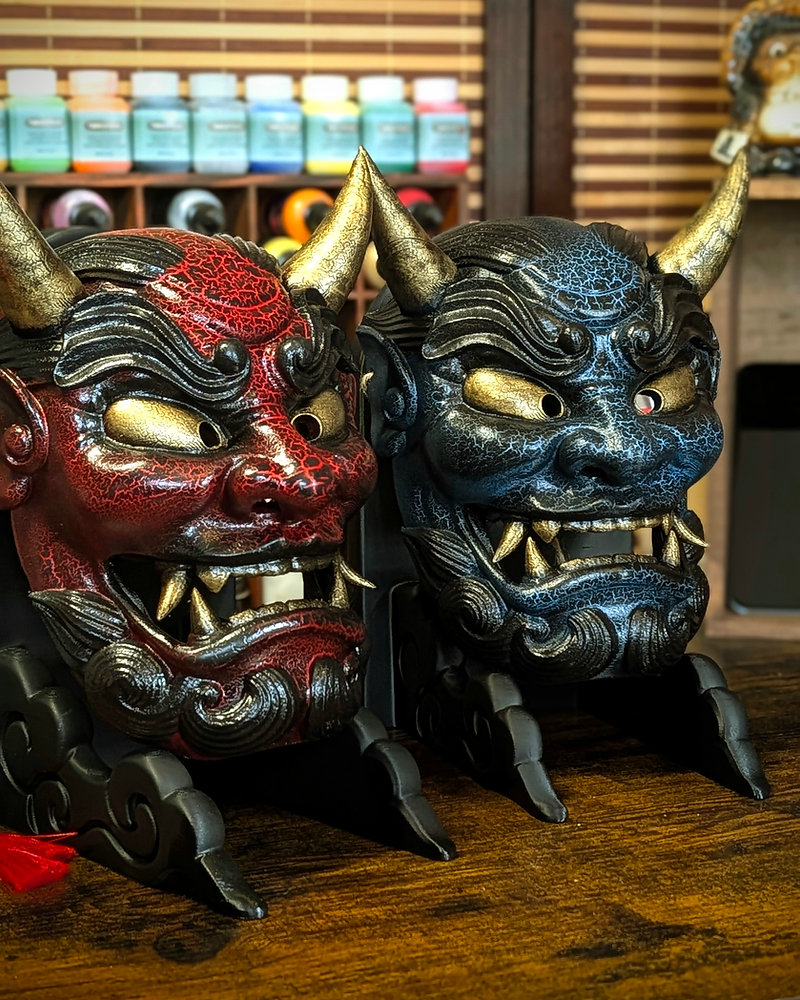
Read the article about Oni masks · See Oni masks
The Japanese gargoyle
The comparison with the gothic gargoyle is clear for a Western eye. Like it, the onigawara is an ugly creature perched high up at the edge of the building. But the likeness stops at the look. The European gargoyle exists first to drain rainwater. The onigawara is designed first as spiritual protection: its ugliness is the tool.
For its history, from lotus flowers to horned faces, and how it is made by the onishi masters, see the article Onigawara: the demon tile that guards Japanese roofs.
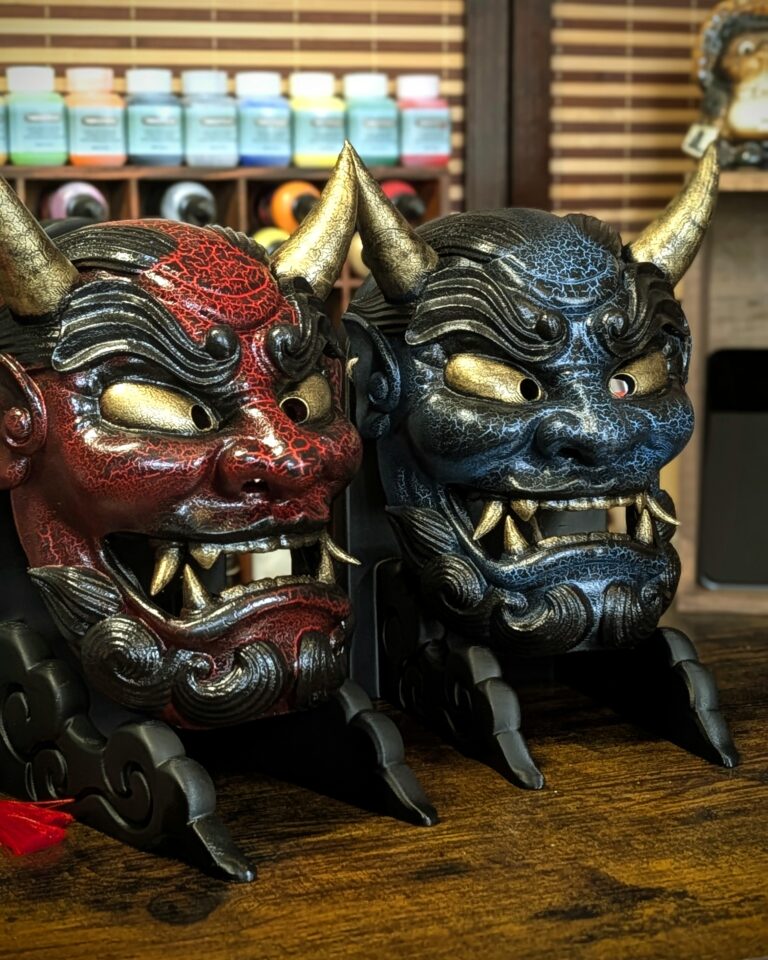
Why such a fierce face
The idea rests on a simple logic of Japanese folklore: you repel a threat with a force of the same kind. The demon of illness, misfortune or fire backs away from a face even more terrible than its own. The onigawara fixed stare is the vigilance of a sentry that never blinks.
In traditional thought, evil spirits travel with the wind, which makes the roof the home first border. Placing the guardian at the top means posting it where the threat arrives first.
The guardian of the threshold
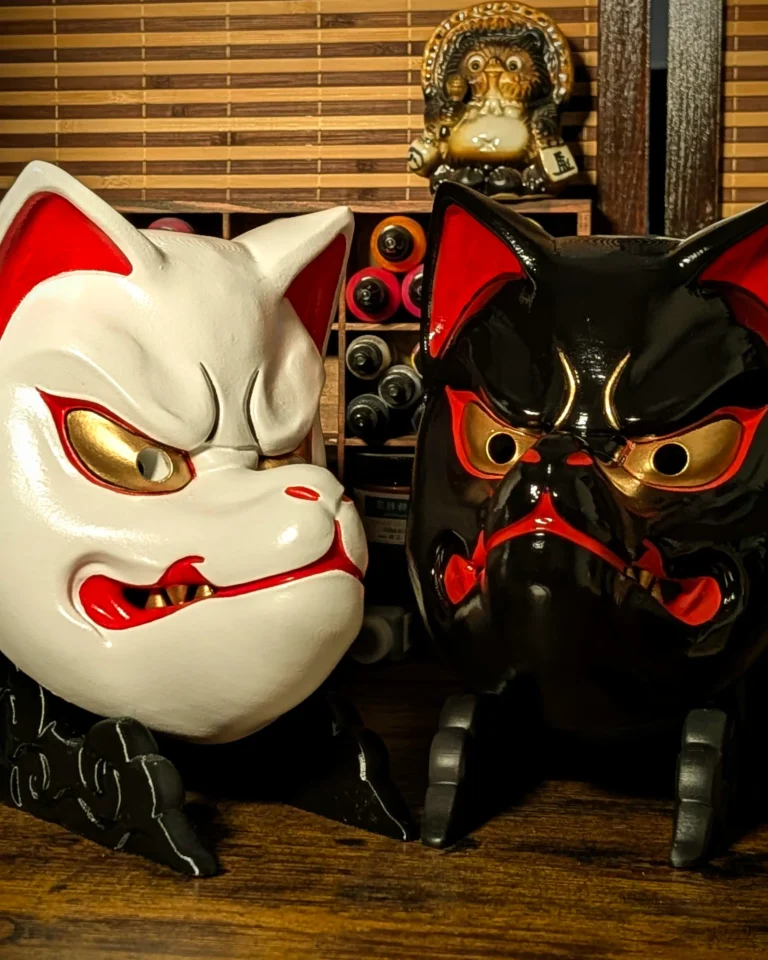
Beyond the roof, the onigawara belongs to a wider family of Japanese guardians stationed at boundaries: white fox statues at Inari shrines, Nio at temple gates, komainu. Each one holds a border, a threshold, a point of passage.
From roof to wall
A clay onigawara weighs between ten and forty kilos, impossible to hang indoors. That is why I reworked these designs as lighter wall masks while keeping the spirit of the original: mineral texture, sentry stare, and the idea of a fragment of temple lifted off its roof.
FAQ
Why are demons placed on roofs in Japan?
To protect the building. In folklore, you repel evil with an image more frightening than itself.
Is the onigawara an angry Oni?
Not quite. Its expression is that of a guard on alert, not an Oni attacking.
Why place it above a door?
Because it belongs to the tradition of threshold guardians, and an entrance is a point of passage.
How does it differ from a European gargoyle?
The gargoyle drains rainwater first. The onigawara is first a spiritual guardian.